Nigerian
Ladi Kwali
Nationality
Nigerian
Date Of Birth | Death
b. 1925 | d. 2011
Biography
Biography
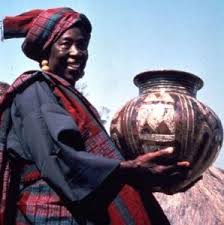
b. 1925, Kwali, Gwari region (now Abuja), Nigeria | d. 1984 Lived and worked in Northern Nigeria Ladi Dosei Kwali was a pioneering Nigerian potter whose mastery bridged traditional Gbagyi craft and Western studio ceramics. Trained by her aunt using the ancestral coiling and pinching techniques, she crafted utilitarian water jars, cooking pots, and storage containers adorned with poetically incised motifs of animals and geometric forms. Her remarkable talent caught the attention of the Emir of Abuja, whose patronage introduced her work to Michael Cardew. Invited to become the first female trainee at the Abuja Pottery Training Centre in 1954, she learned wheel throwing, glazing, and kiln firing, while still preserving her hand-building tradition, producing ceramic works that fused indigenous forms with contemporary techniques. Kwali’s work gained international prominence through exhibitions in London, Paris, and the United States. She received numerous honors, including Member of the Order of the British Empire in 1963, an honorary doctorate from Ahmadu Bello University in 1977, the Nigerian National Merit Award and the Officer of the Order of the Niger in 1981—becoming the only Nigerian woman to appear on national currency, featuring on the 20 naira note. She passed away in 1984, but her legacy endures in the renamed Ladi Kwali Pottery Centre, Ladi Kwali Road, and as an icon of modern African ceramics.
b. 1925, Kwali, Gwari region (now Abuja), Nigeria | d. 1984 Lived and worked in Northern Nigeria Ladi Dosei Kwali was a pioneering Nigerian potter whose mastery bridged traditional Gbagyi craft and Western studio ceramics. Trained by her aunt using the ancestral coiling and pinching techniques, she crafted utilitarian water jars, cooking pots, and storage containers adorned with poetically incised motifs of animals and geometric forms. Her remarkable talent caught the attention of the Emir of Abuja, whose patronage introduced her work to Michael Cardew. Invited to become the first female trainee at the Abuja Pottery Training Centre in 1954, she learned wheel throwing, glazing, and kiln firing, while still preserving her hand-building tradition, producing ceramic works that fused indigenous forms with contemporary techniques. Kwali’s work gained international prominence through exhibitions in London, Paris, and the United States. She received numerous honors, including Member of the Order of the British Empire in 1963, an honorary doctorate from Ahmadu Bello University in 1977, the Nigerian National Merit Award and the Officer of the Order of the Niger in 1981—becoming the only Nigerian woman to appear on national currency, featuring on the 20 naira note. She passed away in 1984, but her legacy endures in the renamed Ladi Kwali Pottery Centre, Ladi Kwali Road, and as an icon of modern African ceramics.
Artworks Within Collection
Artworks Within Collection
More Custodians



"None of us live forever... We are all custodians, holding and promoting art for the next generation. We should all act as patrons and protectors, passing on our culture to the next generation."
Osahon Okunbo
Founder & Philanthropist


"None of us live forever... We are all custodians, holding and promoting art for the next generation. We should all act as patrons and protectors, passing on our culture to the next generation."
Osahon Okunbo
Founder & Philanthropist
"None of us live forever... We are all custodians, holding and promoting art for the next generation. We should all act as patrons and protectors, passing on our culture to the next generation."
Osahon Okunbo
Founder & Philanthropist